
Trees are an important part of every residential landscape, providing shade, privacy, natural beauty, and environmental benefits that enhance the comfort and value of a home. Mature trees create inviting outdoor spaces where families can relax, entertain guests, and enjoy nature throughout the year. However, maintaining healthy trees requires more than occasional watering or fertilising.
Regular pruning plays a vital role in encouraging healthy growth, improving structural stability, and reducing potential safety risks. Professional Residential Pruning Services help homeowners preserve the beauty and health of their trees while protecting surrounding property from damaged or overgrown branches.
Many homeowners use the terms pruning and trimming interchangeably, believing they refer to the same process. Although both involve cutting branches, they serve different purposes and produce different outcomes. Understanding the distinction helps homeowners choose the most appropriate service for their trees and ensures they receive the right care at the right time.
One of the most common questions homeowners ask is, “What is the difference between pruning and trimming?” Pruning focuses primarily on the health, structure, and long-term development of a tree by selectively removing dead, diseased, damaged, weak, or poorly positioned branches.
Trimming, on the other hand, is generally performed to improve the appearance of a tree or shrub by shaping overgrown foliage and maintaining a neat, tidy landscape. While trimming is often cosmetic, pruning is a specialised tree care practice that promotes healthier growth and greater structural stability.
Understanding how pruning and trimming differ allows homeowners to make informed decisions that support healthier, safer, and more attractive landscapes.
Why Residential Tree Maintenance Is Important
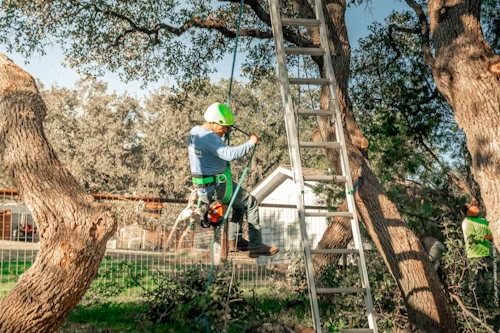
Trees continue to grow throughout their lives, requiring periodic maintenance to remain healthy and safe.
Without regular care, branches may become overcrowded, diseased, damaged, or structurally weak. Overgrown canopies can reduce sunlight, restrict airflow, interfere with buildings, and create safety hazards during storms.
Professional residential pruning helps prevent these issues while preserving the natural beauty of mature trees.
What Is the Difference Between Pruning and Trimming?
Although both involve cutting branches, pruning and trimming serve different purposes.
Pruning Focuses on Tree Health
Pruning is performed to improve the overall health and structure of a tree.
Professional arborists carefully remove dead, diseased, damaged, crossing, or weak branches to encourage stronger growth and reduce the risk of disease or branch failure. Every pruning cut is made with the tree’s long-term health in mind.
Proper pruning extends the lifespan of valuable trees.
Trimming Focuses on Appearance
Tree trimming is generally performed to maintain a neat and attractive appearance.
It involves cutting back overgrown foliage, shaping hedges, maintaining uniform growth, or controlling the size of ornamental trees and shrubs. While trimming improves aesthetics, it does not always address underlying health or structural issues.
Regular trimming helps maintain tidy residential landscapes.
Pruning Requires Technical Knowledge
Professional pruning requires an understanding of tree biology, growth patterns, branch collars, seasonal timing, and structural development.
Incorrect pruning techniques may damage the tree, delay healing, or encourage disease.
Qualified arborists make pruning decisions based on scientific principles rather than appearance alone.
Trimming Is Often More Routine
Many trimming tasks are performed on a scheduled basis to maintain consistent landscape presentation.
Residential hedges, ornamental shrubs, and decorative trees often benefit from regular trimming to preserve their desired shape.
Benefits of Professional Residential Pruning
Proper pruning offers numerous long-term advantages.
Improved Tree Health
Removing unhealthy branches allows trees to direct energy toward vigorous new growth.
Improved airflow and sunlight penetration also reduce the likelihood of fungal diseases.
Healthy trees become more resilient over time.
Increased Safety
Dead or weakened branches may fall unexpectedly during strong winds or storms.
Professional pruning removes these hazards before they threaten people, vehicles, or nearby buildings.
Routine maintenance improves overall property safety.
Stronger Tree Structure
Structural pruning encourages balanced branch development.
Well-distributed weight reduces stress on major limbs while improving stability throughout the tree’s life.
Young trees particularly benefit from formative pruning.
Enhanced Appearance
Healthy trees naturally look more attractive.
Professional pruning preserves each tree’s natural shape while removing damaged or overcrowded growth that detracts from its appearance.
Common Residential Pruning Services
Professional arborists offer several specialised pruning techniques.
Crown Cleaning
Dead, dying, broken, and diseased branches are selectively removed.
This improves safety while supporting healthy growth.
Crown Thinning
Selective branch removal reduces canopy density.
Better airflow and sunlight penetration improve tree health while reducing wind resistance.
Crown Reduction
Some residential trees outgrow their available space.
Crown reduction carefully decreases canopy size while maintaining the tree’s natural appearance and structural integrity.
Clearance Pruning
Branches growing too close to roofs, fences, driveways, pathways, or powerlines are removed.
Proper clearance protects surrounding property while preserving healthy growth.
Formative Pruning
Young trees benefit from early structural guidance.
Proper branch selection encourages stronger future development and reduces maintenance requirements later.
Signs Your Trees Need Pruning
Several indicators suggest professional pruning may be beneficial.
Dead Branches
Dead limbs create safety risks and may attract insects or fungal diseases.
Prompt removal protects both the tree and surrounding property.
Crossing Branches
Branches rubbing together gradually damage bark.
These wounds may become entry points for disease.
Selective pruning prevents further damage.
Dense Canopies
Overcrowded foliage restricts airflow and blocks sunlight.
Professional thinning improves growing conditions throughout the tree.
Storm Damage
Broken or hanging branches require immediate attention following severe weather.
Prompt pruning restores safety.
Uneven Growth
Trees developing unbalanced canopies benefit from corrective pruning.
Balanced growth improves long-term stability.
Why Hire Professional Residential Pruning Services?
Tree pruning requires much more than cutting branches.
Expert Assessment
Professional arborists evaluate tree health before making any cuts.
This ensures pruning supports long-term growth rather than causing unnecessary stress.
Proper Equipment
Specialised climbing systems, elevated work platforms, pruning saws, chainsaws, ropes, and safety equipment allow arborists to work efficiently and safely.
Professional equipment also minimises damage to surrounding property.
Safe Work Practices
Working at height around heavy branches involves significant risks.
Qualified professionals follow strict safety procedures that protect homeowners, workers, and nearby structures.
Long-Term Tree Care
Professional pruning forms part of a broader tree management strategy.
Routine inspections help identify diseases, structural issues, and maintenance needs before they become serious problems.
Caring for Trees After Pruning
Proper aftercare helps trees recover successfully.
Water During Dry Weather
Adequate moisture supports healthy recovery following pruning.
Deep watering encourages strong root development.
Apply Organic Mulch
Mulch conserves soil moisture while improving soil quality.
Keep mulch away from direct contact with the trunk.
Monitor New Growth
Healthy trees typically respond with balanced new growth after pruning.
Regular observation helps identify future maintenance needs.
Schedule Routine Inspections
Ongoing professional inspections ensure trees continue developing safely and remain in good health.
Preventative maintenance reduces future costs.
Common Mistakes to Avoid
Improper pruning can negatively affect tree health.
Over-Pruning
Removing too much foliage weakens the tree by reducing its ability to produce energy.
Professional arborists remove only the branches necessary.
Tree Topping
Cutting the upper canopy indiscriminately encourages weak regrowth and increases disease risk.
Modern arboriculture discourages this practice.
Incorrect Cutting Techniques
Improper cuts damage the branch collar and slow natural healing.
Correct pruning techniques promote healthy wound closure.
DIY Pruning Large Trees
Large residential trees should always be managed by experienced professionals.
Working at height with chainsaws presents serious safety hazards.
Frequently Asked Questions
What is the difference between pruning and trimming?
Pruning focuses on improving a tree’s health, structure, and long-term development by removing dead, diseased, damaged, or weak branches. Trimming primarily improves appearance by shaping overgrown branches and maintaining a neat, attractive landscape.
How often should residential trees be pruned?
The frequency depends on the tree species, age, condition, and growth rate. Regular professional inspections help determine the most appropriate maintenance schedule.
Is pruning better than trimming?
Neither is necessarily better—they serve different purposes. Pruning supports tree health and structural integrity, while trimming focuses on maintaining appearance. Many residential landscapes benefit from both services at different times.
Conclusion
Healthy residential trees require thoughtful, professional care throughout their lives. While trimming helps maintain a neat and attractive landscape, pruning plays a far more important role in supporting long-term tree health, structural stability, and property safety.
Understanding the distinction allows homeowners to choose the right service for their specific needs while protecting one of their property’s most valuable natural assets.
Professional Residential Pruning Services provide the expertise needed to assess tree health, remove hazardous branches, encourage balanced growth, and preserve the natural beauty of every tree.
By investing in routine pruning performed by qualified professionals, homeowners can enjoy healthier trees, safer outdoor spaces, improved property value, and beautiful landscapes that continue to thrive for many years to come.







Leave a Reply